Take this as a scenario (this really happens, by the way): two businesses buying an LED display in the same week. One runs a sports bar and wants the big game live on screen the second it happens. The other runs a chain of quick-service restaurants and just needs a rotating menu board that updates on a schedule. Both need an LED display. Neither needs the same control system. That’s the asynchronous vs synchronous LED display question in a nutshell, and getting it wrong is one of the most common (and most avoidable) mistakes buyers make.
Asynchronous vs Synchronous LED Display Control, Defined Simply
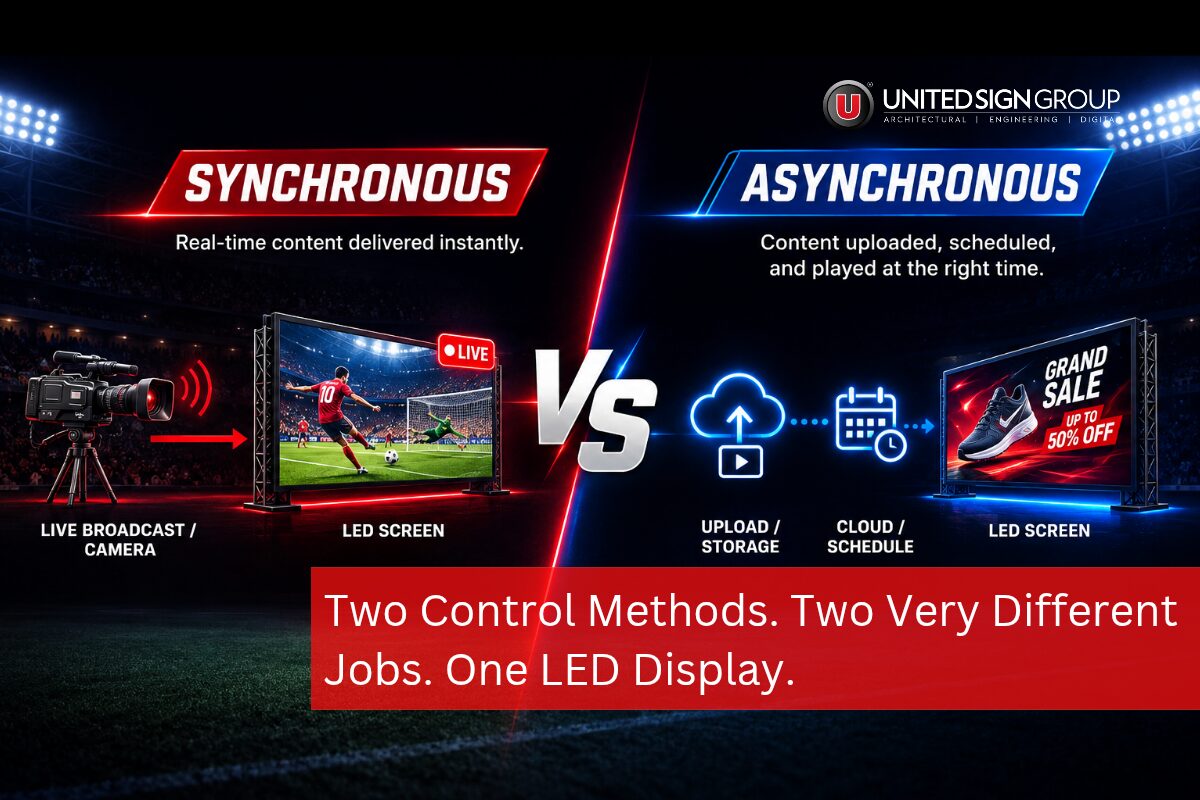
Before comparing use cases, it helps to strip this down to plain language. A synchronous control system keeps your LED display connected to a live source, typically a computer, at all times, so whatever plays on that source plays on the screen in real time. Disconnect the source, and the screen goes black. An asynchronous control system works differently. Content gets uploaded once to a media player or controller with built-in storage, and the display runs that content on its own, on a schedule, without needing a constant live connection. One depends on a continuous feed. The other depends on what’s already in storage.
Synchronous Control: When Real-Time Actually Matters
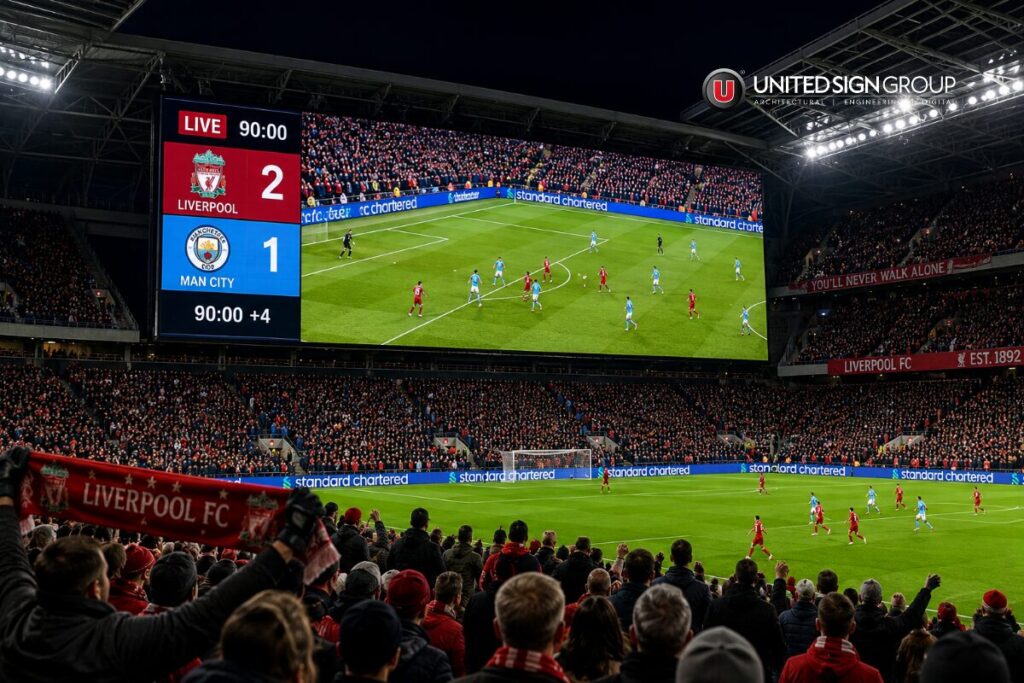
Synchronous systems exist for one reason above all: live content can’t wait. Sports broadcasts, news feeds, concerts, and any display that needs to mirror a computer screen frame by frame all call for synchronous control. United Signs’ displays are built to run synchronous playback through industry-standard control software, streaming content to the screen in real time rather than storing it first. The tradeoff is dependency. A synchronous setup needs a stable, always-on connection. So if that connection drops, so does your screen. That’s a fair price to pay at a stadium or a live event, but it’s overkill for a display that’s simply looping the same three promotions all week.
Asynchronous Control: When Independence Wins
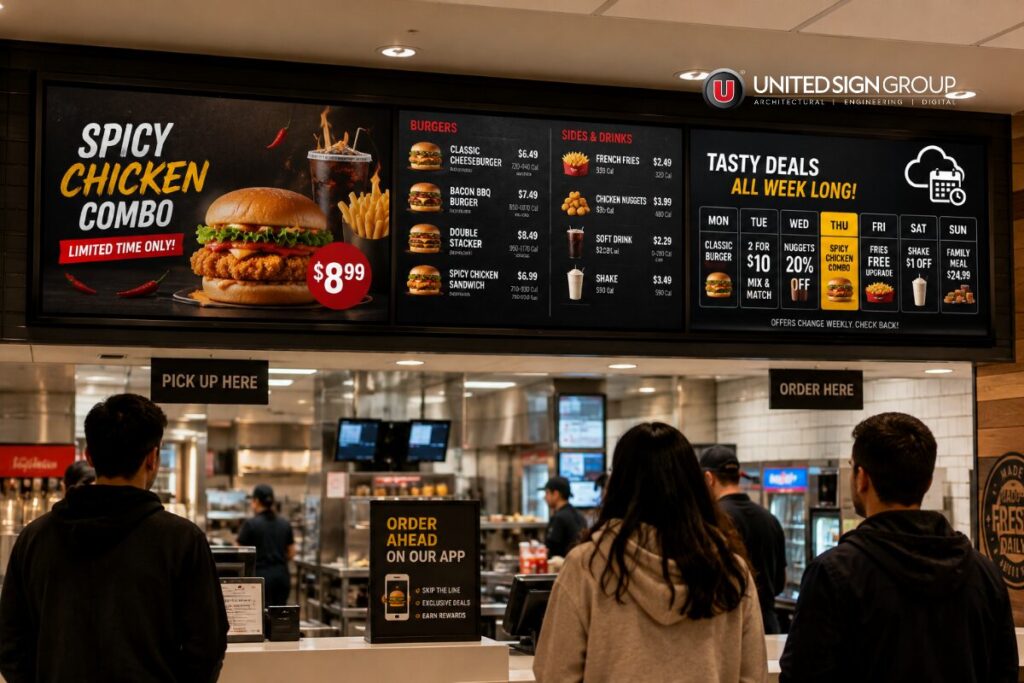
Asynchronous systems flip that tradeoff. Content is prepared, uploaded, and stored directly on the controller, so the display keeps playing even if the network goes down or nobody’s touching the system that day. This is why asynchronous vs synchronous LED display comparisons so often land in favor of async for retail signage, restaurant menu boards, lobby displays, and outdoor signs running scheduled promotions. United Signs’ displays support cloud-based scheduling and remote monitoring on top of that, so a team can push new content, adjust brightness, or set on/off times for dozens of screens across multiple locations without visiting a single site in person.
A Pretty Real Example: Retail Chain vs. Live Venue
Consider a regional QSR chain rolling out digital menu boards across twenty locations. Nobody’s editing that content minute to minute, and a dropped Wi-Fi connection shouldn’t mean a blank menu board during the lunch rush. That’s a textbook asynchronous setup: the team schedules content once through a cloud platform and it plays reliably at every location, connection or no connection. Now compare that to a stadium simulcasting the game on a video wall. That display absolutely must mirror the live feed in real time, which makes synchronous control non-negotiable, network dependency and all. Same category of hardware, two completely different control needs.
Matching Asynchronous vs Synchronous LED Display Control to Your Project
The right answer usually comes down to one honest question: does your content need to update live, or does it just need to run reliably on a set schedule? If the answer is live, synchronous control is worth the network dependency. If the answer is scheduled and independent, asynchronous control saves you the headache of maintaining a constant connection across every screen you own. Plenty of larger installations end up using both, running synchronous feeds during live events and switching to asynchronous playback the rest of the time.
Choosing between asynchronous vs synchronous LED display control isn’t about picking the more advanced option; it’s about matching the system to how your content actually behaves day to day. Get that match right, and everything downstream, from software licensing to network setup to daily operation, gets a lot simpler.
Not sure which fits your project? Get help matching control to your project, and we’ll walk through your content, your locations, and your network setup to land on the right system the first time.